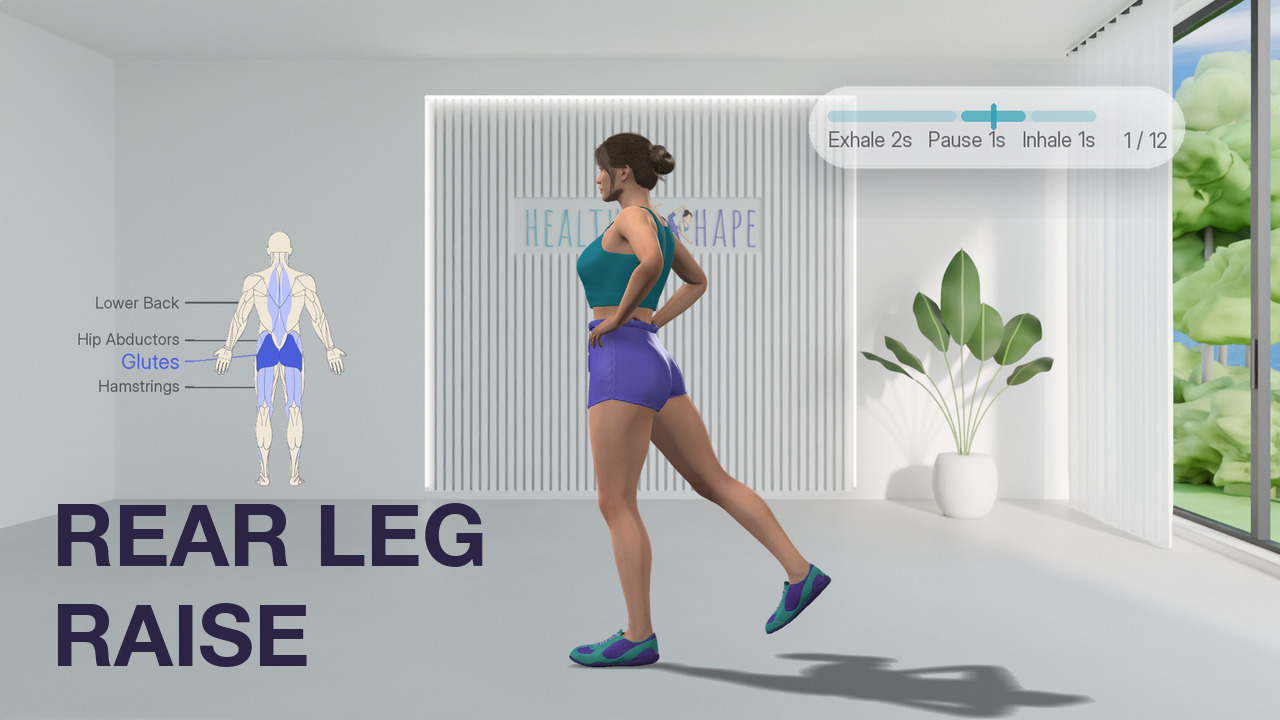
The standing rear leg raise is a bodyweight exercise for your glutes: stand tall with your hands on your hips and raise one leg straight back with control. It needs no equipment, works six muscle groups and suits beginners, whether at home, in the gym or outdoors.
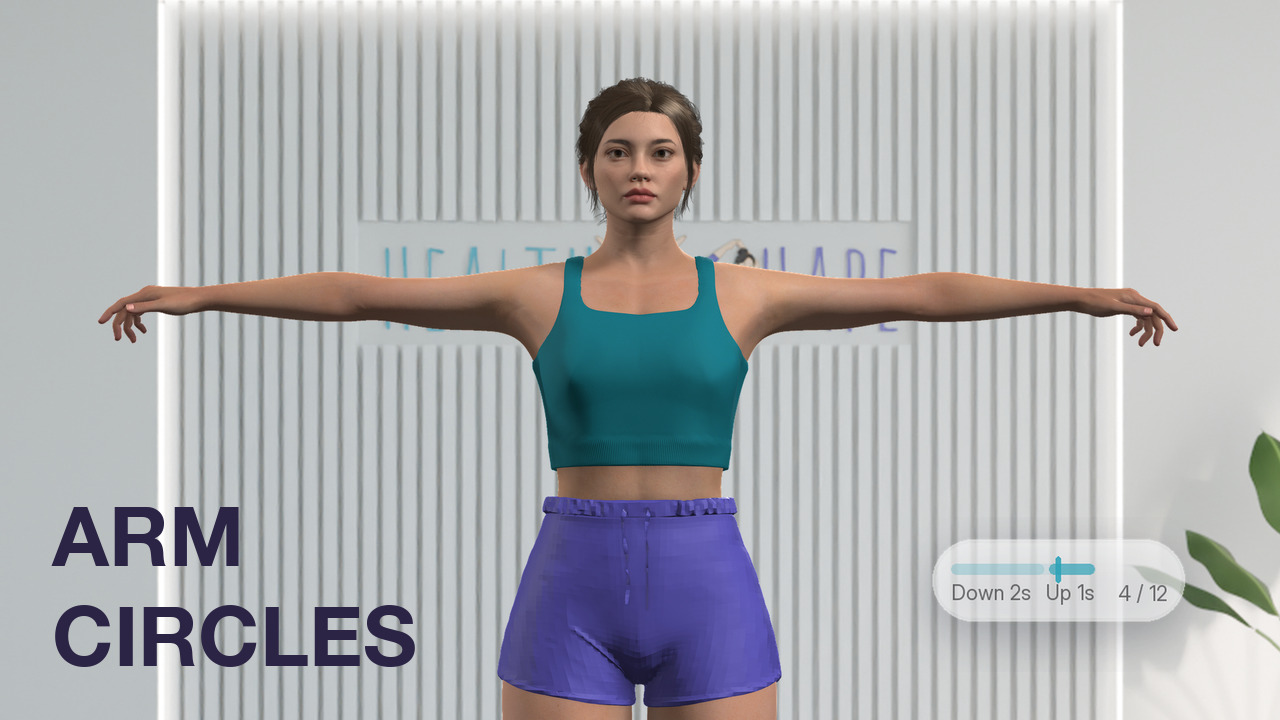
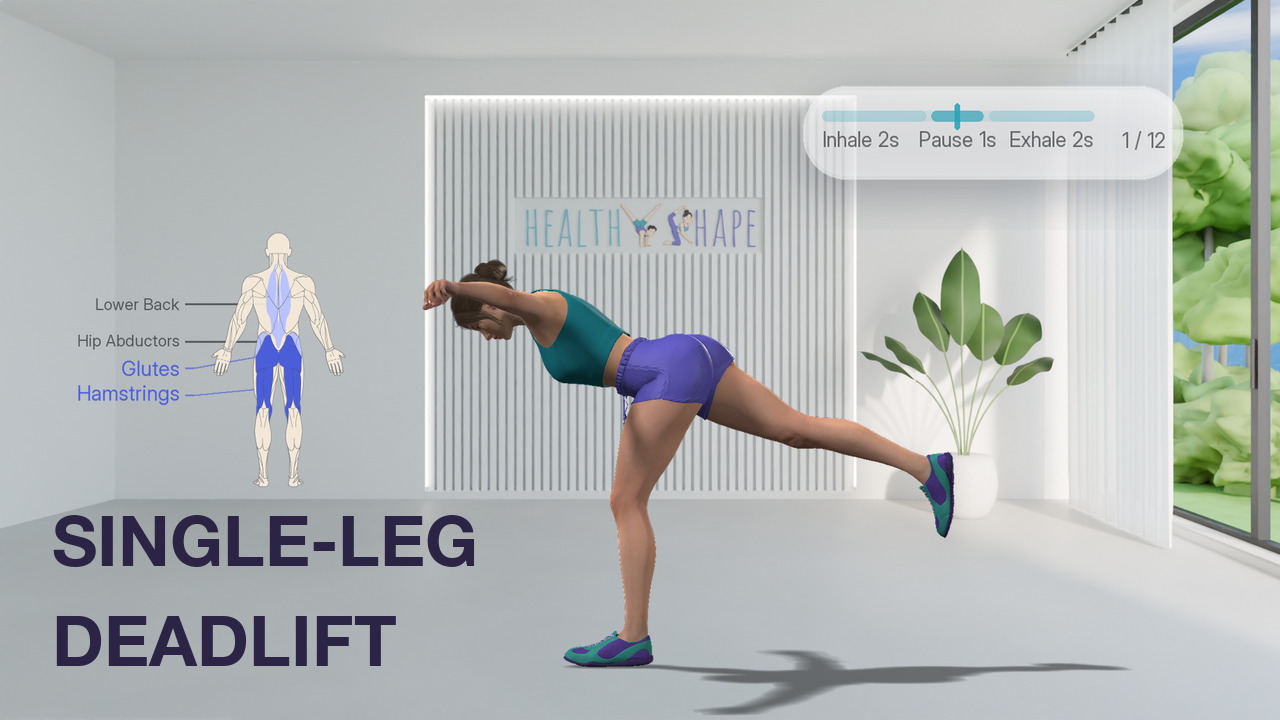
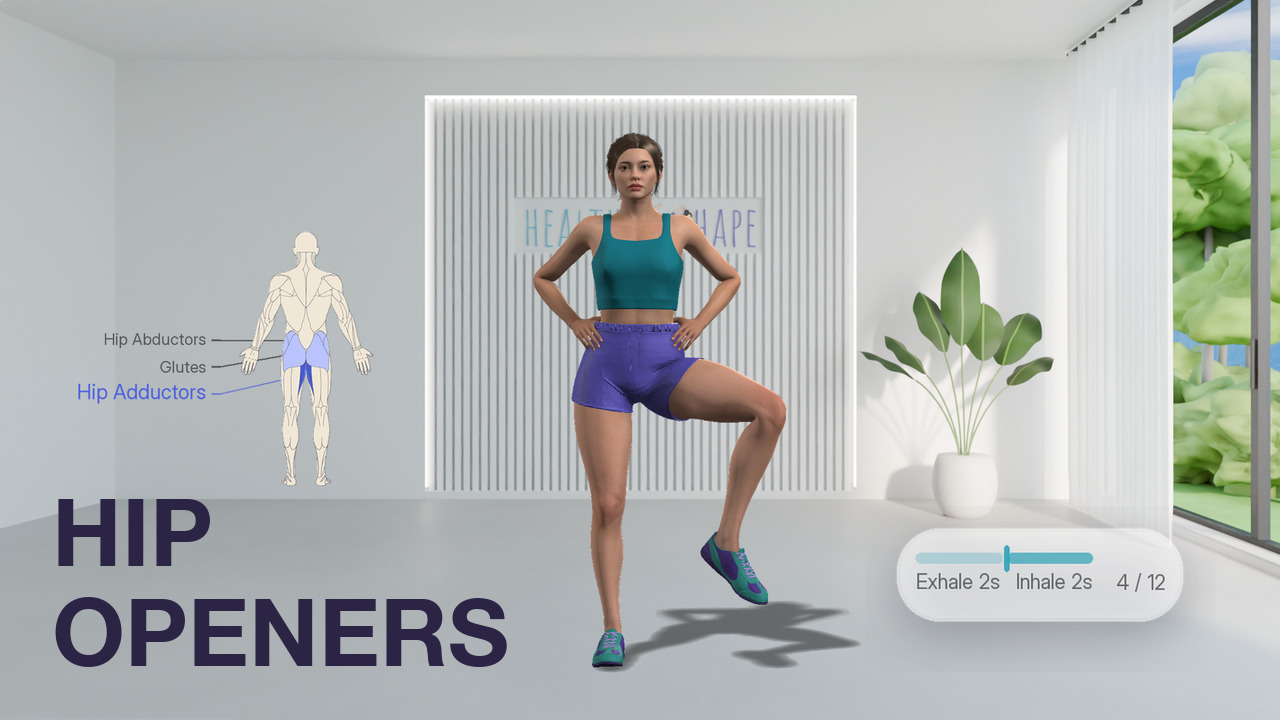
This guide accompanies our video lesson above. The video teaches the movement at the speed it is really performed, from the front, from a three-quarter angle and from the side, one leg and then the other. Then it explains the muscles at work (seen from the back and the front), the breathing and the tempo, and names the five most common mistakes, each with the cue that fixes it. Last come twelve rear leg raises at real speed, from all four camera angles, for you to follow along with.
How to do a standing rear leg raise, step by step
- Set up. Stand tall with your feet hip-width apart and your hands on your hips. Keep your core engaged and your shoulders relaxed.
- Shift your weight. Shift your weight onto one leg, with that knee straight but not locked.
- Raise the free leg straight back. Take about two seconds to raise your free leg straight back behind you, keeping your torso upright and moving only at the hip.
- Squeeze and pause. When you feel a strong contraction in your glutes, pause there for about one second.
- Lower with control. Lower your leg back to the start in about one second.
- Switch legs. Do the next repetition with the other leg, and keep alternating.
Muscles worked in a standing rear leg raise
The standing rear leg raise is an isolation movement at the hip, and six muscle groups share the work: the glutes lead as its target muscles, and the hamstrings, outer hips, lower back, core, and shins and ankles assist them.
- Glutes: the gluteus maximus leads the movement, pressing your leg back.
- Hamstrings: these three muscles at the back of the thigh (biceps femoris, semitendinosus and semimembranosus) help lift your leg.
- Outer hips: the hip abductors (the gluteus medius and minimus) steady you on your standing leg.
- Lower back: the erector spinae keep you tall.
- Core: the rectus abdominis stays engaged and helps keep your torso upright.
- Shins and ankles: three smaller muscles of the lower leg (the tibialis anterior, the peroneus longus and the tibialis posterior) help keep you balanced on your standing leg.
Breathing and tempo: 2 up, 1 pause, 1 down
Every repetition follows the same rhythm and takes about four seconds:
- Up, 2 seconds: breathe out as you raise your leg straight back.
- Pause, 1 second: at the top, with your glutes squeezed.
- Down, 1 second: breathe in as you lower your leg with control.
That rhythm is what turns movement into training: the slow way up and the pause at the top keep your glutes working, instead of letting momentum swing your leg. Keep the same tempo on every repetition, and don’t speed up as you tire.
5 common standing rear leg raise mistakes and how to fix them
- Leaning forward. If you lean forward, keep your chest lifted. Cue: “chest lifted”.
- Arching your lower back. If your lower back arches, brace your core. Cue: “brace your core”.
- Bending the knee. If your knee bends, keep it straight but not locked. Cue: “straight, not locked”.
- Swinging the leg. If your leg swings, move only at the hip. Cue: “move only at the hip”.
- Using momentum. If you use momentum, keep the movement slow and controlled. Cue: “slow and controlled”.
Sets, reps and variations
For general fitness, 2 to 4 sets of 10 to 20 repetitions on each leg are typical, with 30 seconds of rest between sets. The video alternates legs; you can also finish all your repetitions on one leg before you switch. A good first set is the one in the video: twelve rear leg raises, alternating legs.
- Easier: keep one hand on a chair or a wall for balance, or don’t raise your leg as far.
- Harder: add ankle weights, do more repetitions, move more slowly, or pause at the top for 10 to 30 seconds.
Safety
Don’t arch your lower back or lean your torso forward, and keep every movement slow and controlled, without momentum. If you have lower-back pain or hip problems, consult a professional before doing this exercise.
Your turn
Play the video above and do twelve rear leg raises with the coach, at the speed you would really train: chest lifted, core braced and leg straight back. How long can you pause at the top? Tell us in the comments under the video on YouTube. If this lesson helped, subscribe to HealthyShape on YouTube for a new exercise lesson every week. Every exercise in the HealthyShape app carries the same muscle view and tempo guide you see in the video.