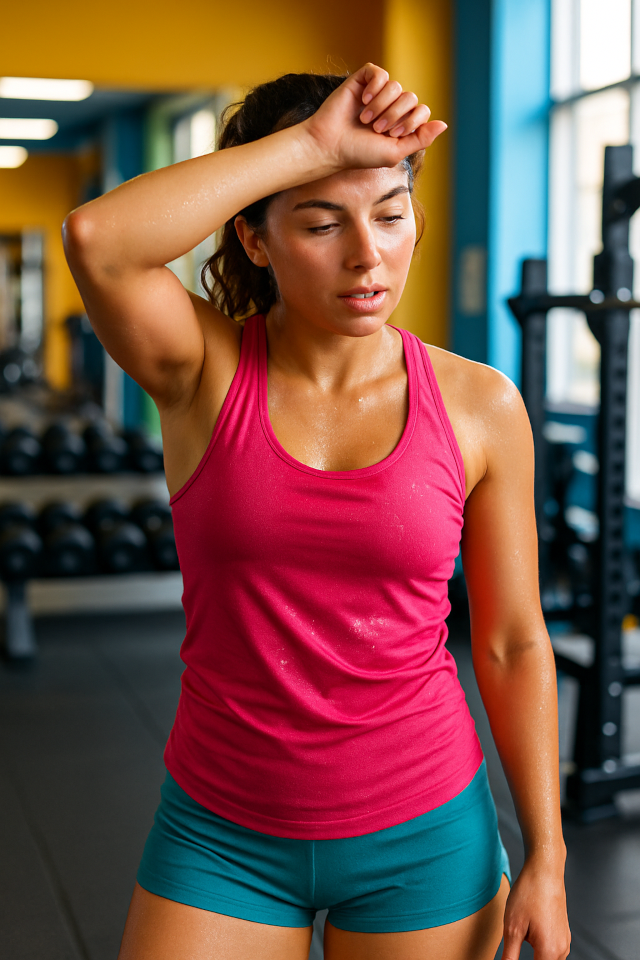
You may have seen people trying to sweat more during exercise using various methods. But is this approach truly effective or scientifically supported? To answer that, we first need to understand the mechanism of sweating.
When body temperature rises, the anterior hypothalamus acts like a thermostat. It activates the sweat glands on the skin’s surface, leading to sweating as a way to cool the body down and maintain thermal balance. While the number on the scale may decrease temporarily due to sweating, this is simply a result of fluid loss (dehydration) and will return to normal once fluids are replenished.
Now that you understand this process, it’s clear that increased sweating does not equate to increased fat burning. It merely reflects temporary water loss. Therefore, individuals who sweat more during workouts should make sure to drink enough water to stay hydrated. The rate of sweating is influenced by various factors such as environment, personal health, and individual conditions. Ultimately, the most effective way to lose weight is by following a structured and balanced diet, engaging in resistance training, and maintaining consistency and patience.