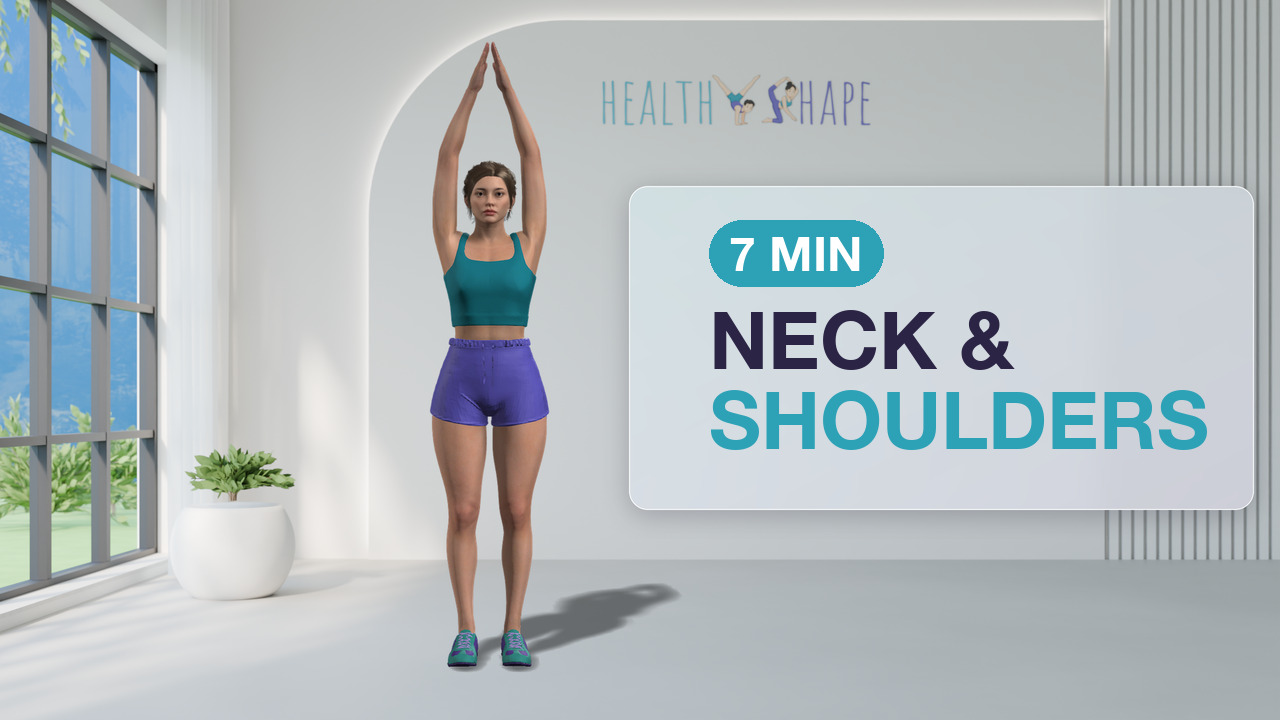
This neck and shoulder mobility session takes about seven minutes: four gentle movements for your neck, shoulders and arms, done with us in real time. It turns your neck gently both ways, moves your shoulders in every direction and takes your arms all the way overhead. It needs no equipment and suits beginners: do it at home, in the gym or outdoors.
This guide accompanies our follow-along video above. The session runs in real time: a countdown brings you into every set, a timer counts every rest, and as you go the video shows the muscles each movement works and the tempo of every counted repetition. At the end it looks back at the muscles you have moved, from your neck all the way down to your core, and at what this session has done.
The four movements, in order
- Shoulder circles, 2 sets of 10. Stand tall with your arms relaxed by your sides. Lift your shoulders toward your ears, roll them back and let them drop: up for two seconds, down for one, breathing in as they rise and out as they come down. Make big, smooth circles, never jerky, and keep your neck long and soft.
- Neck rotations, 2 sets of 8, four per side. Stay tall, shoulders relaxed, eyes forward. Turn your head slowly to one side and look over your shoulder, pause for a moment, come back to the middle, then do the same to the other side: two seconds to turn, one to pause and one to come back. Breathe out as you turn and in as you come back, keep your chin level and go only as far as is comfortable: never force it.
- Arm circles, 2 sets of 10. Raise your arms out to the sides at shoulder height and circle them forward: down for two seconds, up for one. Keep your arms long, straight but not locked, your shoulders down and away from your ears, and your core gently engaged, so your back stays long. Make the circles smooth and even, with no rushing, and breathe normally.
- Around the world, 2 sets of 10. Stand with your feet hip-width apart and your arms by your sides. Sweep your arms out to the sides in a wide arc until your hands meet overhead, then bring them back down the same way: up for two seconds, down for two, breathing in as your arms rise and out as they come down. Keep your elbows soft, not locked, and your ribs down, so your back doesn’t arch.
How the session runs
The whole session takes 6 minutes and 49 seconds:
- Eight sets: two of each movement.
- Rests: 15 to 30 seconds between the sets of a movement and 15 seconds before the next movement, each one counted down on screen.
- The pace: every movement is done at the tempo it is meant to have, which the video shows for every counted repetition, so you never need to time yourself.
What this session does for you
Here is what these seven minutes do for you:
- Your neck: it turns your neck gently through its comfortable range, both ways.
- Your shoulders: it moves them in every direction, up, back, down and around.
- Your arms: it takes them out to the sides and all the way overhead.
- Your muscles: it leaves the muscles around your neck, shoulders and arms warm and moving more easily, ready for the rest of your day.
Make it easier or harder
- Easier: if a shoulder pinches or complains, make the circles or the arc smaller; keep each neck turn smaller; and do the shoulder circles and around the world sitting down: they work just as well.
- Harder: try a few more arm circles, and take a light weight in each hand for around the world.
Safety
Move only as far as is comfortable and never force a range, especially when you turn your head: if you feel dizzy, keep the turn small or sit down. If anything aches, make the movement smaller and slower, and stop if it hurts. If you have a neck or shoulder problem, consult a professional before you start.
Your turn
Play the video above and move with the coach, from the first countdown to the last set. Where do you carry the most tension: your neck or your shoulders? Tell us in the comments under the video on YouTube. If this session helped, subscribe to HealthyShape on YouTube for a new workout program and a new exercise lesson every week. Every exercise in the HealthyShape app carries the same muscle view and tempo guide you see in the video.